I had the opportunity this week to attend an enlightening panel discussion featuring the Spanish and Portuguese ambassadors to the United States, hosted by the Transatlantic Policy Center (TPC) at American University’s School of International Service. The event was the latest in a series of conversations that the center has hosted, with each event providing a platform for experienced European policymakers to speak candidly on challenging geopolitical issues before an audience of students, journalists, academics, and members of the foreign policy community.
At this event, TPC co-chairs Professor Michelle Egan (full disclosure — Michelle was my graduate thesis advisor) and Professor Garret Martin welcomed Amb. Ángeles Moreno Bau (Ambassador of Spain to the United States) and Amb. Francisco António Duarte Lopes (Ambassador of Portugal to the United States) to dissect key issues currently facing Spain and Portugal, reflect on their past 40 years of European Union (EU) membership, and elicit potential lessons for the handful of Eastern European countries that are embarking on the same journey toward EU membership.
Prof. Egan kicked off the conversation by asking both ambassadors how joining the then-European Community (EC) together in 1986 affected their bilateral relations, as well as what advice both ambassadors would give to the EU’s current roster of prospective members. Notably, the 1986 accession of Spain and Portugal to the EU took place roughly a decade after the fall of both countries’ dictatorships and transitions to democracy.
Amb. Moreno and Amb. Lopes both noted that the past 50 years have been characterized by transformation, starting with democratization, then with interregional cooperation, and finally with significant economic, technological, infrastructural, and societal development. Amb. Moreno noted that, after accession, EU funding was key to Spain’s infrastructure transformation, and Amb. Lopes concurred, highlighting the ways that EU accession accelerated Portugal’s healthcare, transportation, and communications infrastructure. Amb. Moreno emphasized that exposure to EU norms helped turn Spain into a more open and accepting society, while Amb. Lopes described Portugal’s post-authoritarian journey as one of decolonization, democratization, and development. Post-1975, Portugal recognized the independence of its former African colonies of Mozambique, Cabo Verde, São Tomé and Príncipe, and Angola.
Prof. Martin shifted the discussion toward both countries’ role in supporting Ukraine in its current defensive war against Russian territorial aggression and inquired about each country’s stance on defense spending. Amb. Lopes emphasized that Portugal strongly supports the Ukrainian cause, despite the significant geographic distance between the two countries, and noted that Portugal has accepted over 60,000 refugees fleeing the conflict.
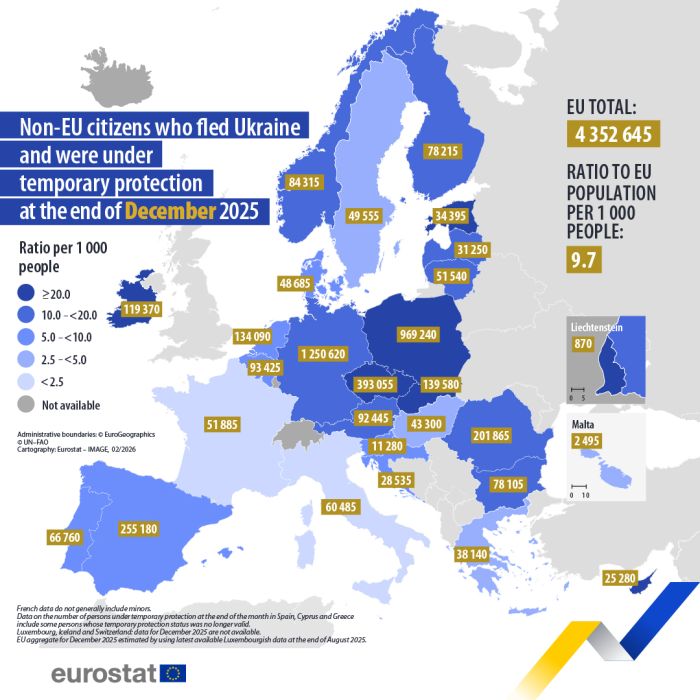
Amb. Moreno highlighted how the Russia-Ukraine war has significantly influenced Spanish priorities on defense-related procurements, ending a long period of naïveté in which many people have held the belief that a significant pan-European conflict could no longer happen after 70 years of intensifying interregional integration and the rise of post-WWII institutions including the EU, United Nations, North Atlantic Treaty Organization, and other relevant multilateral organizations. Spain’s approach has multiple aspects, including providing direct material support to Ukraine’s armed forces, identifying ways to revitalize Spain’s domestic defense contracting industry (with a particular emphasis on financing), and developing supply chains for weapons and critical healthcare supplies.
The conversation then shifted toward the concept of differentiated integration (the subject of much research by Prof. Egan *link* and other EU scholars *link*) and both countries’ current approach to navigating the current fracturing of the multilateral system.
Amb. Moreno emphasized that Spain’s primary focal points are upholding the EU’s Four Freedoms (free movement of goods, free movement of capital, freedom to establish and provide services, and free movement of labor), advancing green policies including renewable energy, expanding trade relations, and maintaining momentum on technological innovation. She noted that Spain has recognized the need to work outside of the multilateral system (especially considering the shortcomings of the World Trade Organization, both perceived and actual). For example, see the following Foreign Affairs article. Most notably, she argued in favor of the usefulness of purpose-built subgroups of EU member states, assembled for the express need of tackling certain objectives of common interest where members of the subgroup are in alignment while broader agreement among the full EU27 membership cannot be attained. Likely models for such sub-regional engagements include that of the Schengen Agreement and the Eurozone, according to Amb. Moreno.
Following up on Amb. Moreno’s idea of advancing trade relations outside of the WTO system, Prof. Egan inquired about the current status of the EU’s recently finalized free trade agreement (FTA) with South America’s Mercosur economic bloc. Notably, research into economic integration topics including the development of internal single markets (such as the European Union, as well as the United States in its infancy) and bilateral FTAs (such as the failed Transatlantic Trade and Investment Partnership) has been a significant focus of Prof. Egan’s academic career.
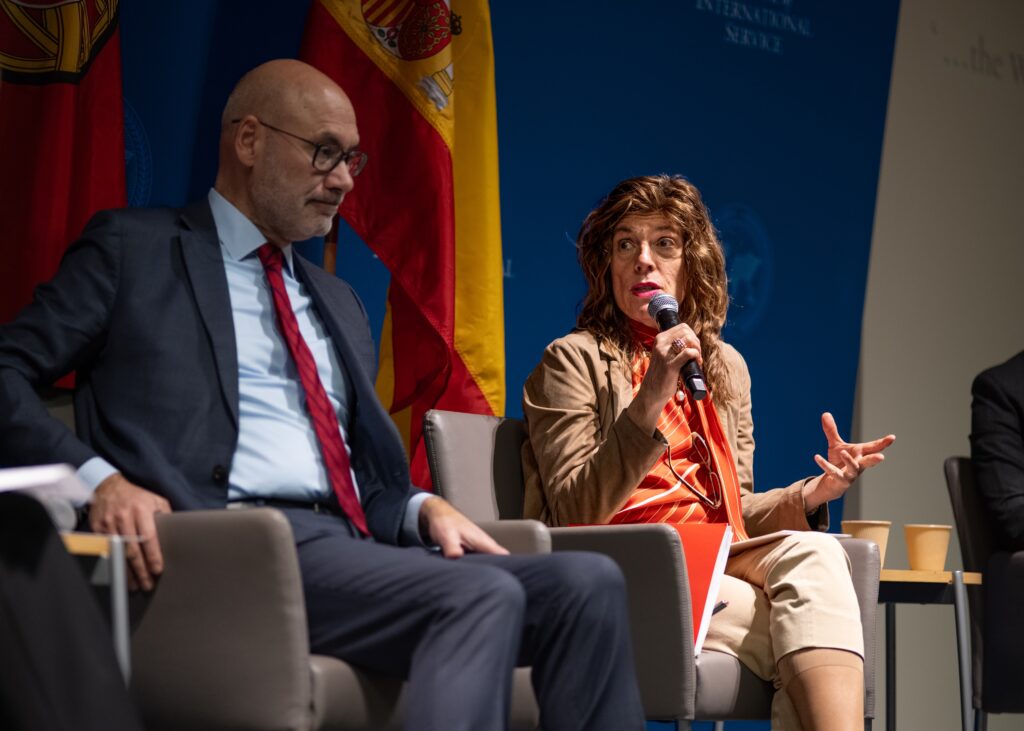
Amb. Moreno emphasized that the EU-Mercosur agreement is part of a larger EU strategy of engaging with major global economies (such as China and India) and regional economic blocs. She expressed enthusiasm that the Mercosur agreement has finally crossed the finish line after 25 years of engagement leading into official negotiations, but acknowledged that some hesitation remains among parts of the Spanish agricultural sector.
Amb. Lopes was optimistic about the positive impact of trade negotiations, regardless of whether individual agreements are successful. He said that even when individual agreements fizzle out (again, TTIP was mentioned), bilateral trade with key trading partners has still increased in terms of value and volume in the background while negotiations carry on.
Prof. Martin steered the trade discussion toward China, eager to gauge the Spanish and Portuguese economic stance toward the world’s second-largest economy.
Amb. Moreno asserted that Spain’s approach toward trade relations with China centers upon de-risking, in contrast with the United States’ emphasis on decoupling. For example, Spain continues engagement with China on trade, but has opted out of joining China’s well-publicized Belt and Road initiative. Amb. Lopes echoed this viewpoint, noting that Portugal is still working with China but is managing risk while doing so, and used Portugal’s 5G telecommunications infrastructure deployment as an example. While various countries worldwide have worked closely with Chinese telecommunications firms to develop their 5G networks, Amb. Lopes noted that Portugal has only accepted partners hailing from EU, NATO, and OECD member states for security reasons.
Amb. Moreno argued that Spain’s current priorities with regard to China are addressing infectious diseases (following up on cooperation during the COVID pandemic) and managing relations with the Russian Federation. In terms of trade, she said that bilateral relations between Spain and China continue to be critical, primarily due to the dismantling of the WTO and the broader multilateral system. Amb. Lopes highlighted the fact that Portuguese economic engagement with China has spanned more than five centuries (starting in the early 1500s when Portuguese sailors established trading outposts along China’s southern coastline) and noted that both countries maintain amicable relations today, with the negotiated return of the exclave of Macau to Chinese control signifying the final chapter of Portuguese decolonization.
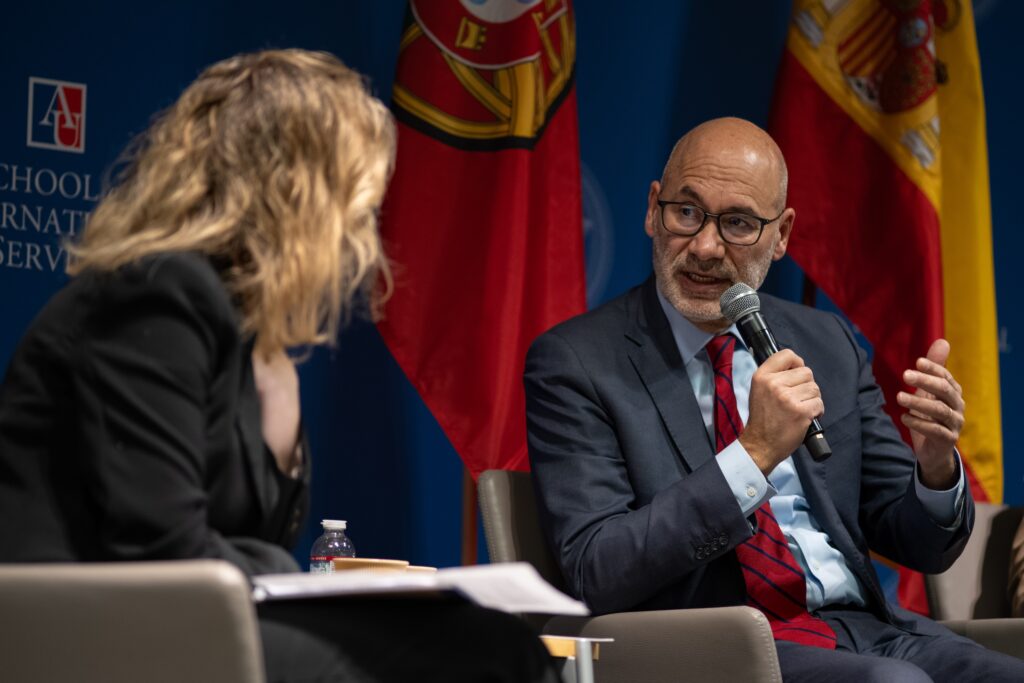
Prof. Egan briefly turned the group’s attention toward the international community’s recent interest in regulating access to social media platforms. Amb. Lopes noted that regulators must stay abreast of technological developments and respond appropriately, especially when potential negative impacts can transcend national borders. Amb. Moreno focused directly on specific societal harms that social media has the capacity to amplify. She emphasized that social media platforms can be used to facilitate offline criminal activities and harmful content, drawing particular attention to promotion or organization of terrorism, the use of social media to enable sex offenses and proliferate sexually abusive materials, and social media’s potential for exposing youth to content that promotes self-harm or other negative actions such as eating disorders. Amb. Moreno highlighted Spain’s approach toward social media and artificial intelligence (AI) regulation, which aims to consult experts and develop a regulatory architecture that mirrors its response to climate change.
At this point, the panel discussion ended and the participants accepted questions from the audience. I was the first member to ask a question, and considering my background in international development, I had something in mind.
I directly addressed Amb. Moreno and noted that Spain has been an outlier in terms of foreign aid spending, having recently boosted international development expenditures by 12 percent while the EU cut spending by roughly 8 percent (and, it goes without saying — the United States has almost entirely cut humanitarian aid spending and has abdicated its role as a global leader in the international development sector, leading to a cascade of spending cuts across multilateral development organizations such as the UN Development Programme and dozens of national development organizations, which have in turn decimated the non-governmental organizations and government contractors that work in the international development industry).
Amb. Moreno underlined Spain’s commitment to advancing the UN Sustainable Development Goals and working within the multilateral system toward achieving humanitarian development goals. She also acknowledged the fact that multiple development issues are interlinked (such as the connection between climate change and increased migration toward temperate climates) and noted that Spain hosted the UN’s 4th International Conference on Financing for Development in Sevilla in 2025.
Amb. Lopes followed up on Amb. Moreno’s comments with a unique insight into the geographic strategy underpinning Portugal’s international development efforts. Recognizing its colonial history and the disparate impacts of climate change on certain regions of the world, Amb. Lopes drew attention to the fact that Portugal has maintained its level of Official Development Assistance (ODA) spending and has prioritized projects that benefit critically affected regions, such as sub-Saharan Africa and small island developing nations (SIDS).
Overall, this was a very stimulating discussion on the path forward for Spain and Portugal, and I am looking forward to seeing how both countries continue to shape these aspects of the EU discourse going forward.